But is scuba diving in the Black Sea worth adding to your bucket list?
The honest answer is yes, with some important caveats. This inland sea straddling Eastern Europe and Western Asia offers something genuinely rare in modern recreational diving: the chance to explore warships and submarines that look like they sank last decade, not 80 years ago.
If you wear corrective lenses, a dive mask fitted with your prescription is strongly recommended for this trip, as the Black Sea's reduced visibility makes clear underwater vision essential, so check out these options before you book.
The problem is that information needed to plan this trip is scattered across individual dive centre websites, fragmented by country, and often missing the practical details that matter when you're crossing the Atlantic for a dive trip.
That's exactly what this guide fixes. We've consolidated everything you need across Bulgaria, Romania, Georgia, and Turkey.
You'll learn why the Black Sea's unusual oceanography makes it unlike any other dive destination, which country best matches your experience level, what specific wrecks you can realistically reach, and how to plan logistics from the US.
What Makes Black Sea Diving Unique: The Anoxic Environment
The Black Sea is one of the world's largest bodies of anoxic water, meaning it contains a deep zone completely devoid of oxygen. Below approximately 150 to 200 metres, the water transitions into a hydrogen sulphide-rich layer where no oxygen-dependent life survives. This eliminates the wood-boring molluscs, bacteria, and organisms that ordinarily reduce a shipwreck to bare steel within decades.
The result is near-perfect wreck preservation. Wooden deck planking, ropes, rigging, and even fabric have been found virtually intact on vessels resting in this anoxic zone. [^1] A WWII wreck in the Mediterranean typically shows heavy biological growth and significant deterioration. The same vessel in the Black Sea's deep zone looks ready to sail again.
For recreational divers, the critical point is this: you won't dive anywhere near the anoxic layer. Standard recreational diving takes place between 5 and 40 metres. The hydrogen sulphide layer begins below 150 to 200 metres. You're operating in fully oxygenated, biologically normal water throughout every recreational dive here.
Water conditions you need to know:
The Black Sea is significantly less salty than the open ocean, with salinity around 18 parts per thousand compared to the ocean's 35. [^2] This lower salinity means less buoyancy, so you'll need 2 to 4 kilograms less weight than your normal ocean setup. Confirm this with your dive operator before your first dive.
Surface temperatures vary considerably by season. During peak summer months of July and August, water temperatures reach 22 to 26°C, making a 5mm wetsuit comfortable. By October, surface temperatures drop to 15 to 17°C, and a 7mm wetsuit or drysuit becomes necessary. Below 20 metres, temperatures remain consistently cooler year-round, typically staying in the 8 to 12°C range regardless of season.
Visibility runs 8 to 15 metres during peak summer conditions, dropping to 4 to 8 metres in spring and autumn. This is lower than the 20 to 30 metres you'd experience in the Red Sea or Maldives, but it's workable for wreck diving and generally competitive with popular European cold-water destinations. Tidal action is minimal and currents are generally mild, which is a significant practical advantage for wreck penetration and underwater photography.
Black Sea Dive Destinations: Country Breakdown
Bulgaria: The Wreck Diving Capital
For most visiting divers, Bulgaria is the obvious starting point. It has the most developed dive infrastructure on the Black Sea coast, the highest concentration of accessible wrecks, and reliable access to English-speaking PADI-certified instruction. Varna is the primary hub, with multiple PADI 5-Star centres, direct international flight connections, and full equipment rental including Nitrox fills.
Signature wrecks include the Regele Carol I, a Romanian Royal Navy destroyer at 24 metres near Varna, accessible to Advanced Open Water divers with intact gun mounts and hull sections. The Soviet Submarine ShCh-211, sitting at approximately 25 metres, is one of the most historically significant recreational wreck dives in Europe. Sunk in 1941 with all hands, it remains largely intact today. The Leitenant Pushchin at 33 metres rewards experienced divers with outstanding preservation detail but requires solid buoyancy control and Advanced Open Water certification at minimum.
Best season runs June through September. US citizens require no visa as Bulgaria is an EU member state. Guided dives run €45 to €75, with Open Water courses between €380 and €500.
Romania: The Emerging Alternative
Romania offers a quieter Black Sea diving experience centred on Constanta and Eforie Sud. The destination draws fewer international visitors, meaning wreck sites receive a fraction of Bulgarian traffic. Pricing runs slightly lower than Bulgaria, but the trade-off is fewer operators, less English-speaking guide availability, and reduced scheduling flexibility. Bucharest is the main entry point, with a roughly two to three hour transfer to coastal dive sites.
Georgia: The Frontier Experience
Georgia is the most adventurous option on this list. The coastline around Batumi combines underwater exploration with extraordinary mountain scenery found nowhere else in this guide. Practical limitations include fewer English-speaking operators, less equipment rental availability, and more variable site access. Georgia is best suited to adventurous divers with 50 or more logged dives who are comfortable with less hand-holding and genuinely excited by an emerging destination.
Turkey: Black Sea's Northern Coast
Turkey's Black Sea coast is the least developed for recreational diving discussed here. Trabzon and Sinop have occasional operations, but you shouldn't plan a dedicated dive trip without extremely thorough advance research and direct operator confirmation. Think of it as a bonus activity during broader cultural tourism rather than a primary travel reason.
Wreck Diving: A Living Museum
The Black Sea was an active theatre of WWII naval conflict, with Soviet, Romanian, German, and Bulgarian forces all operating in these waters. The result is a collection of warships within recreational diving depth range, most in far better condition than equivalent wrecks anywhere else in the world.
Bulgaria has also developed artificial reefs to build diving infrastructure. The Pioneer fishing vessel was the first intentionally sunk artificial reef in Bulgarian waters and now supports a genuine resident marine population, offering newer divers a forgiving introduction to wreck diving.
The Tupolev aircraft reef near Varna has become an unusual and photogenic site, with the fuselage providing shelter for marine life and a striking underwater silhouette. These artificial sites are ideal for Open Water certified divers building confidence before attempting the deeper historical military vessels.
For divers interested in ancient wrecks, ask operators in Varna or Constanta specifically about archaeologically adjacent dive sites. The deeper anoxic zone has preserved wooden vessels dating back centuries, but accessing those requires technical certifications well beyond recreational limits. [^3]
Marine Life: Honest Expectations
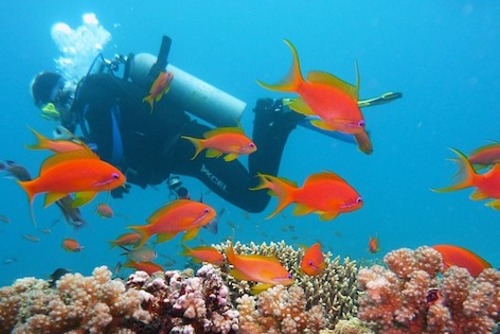
The Black Sea is not the Red Sea or the Maldives for marine life. Biodiversity is lower, reef ecosystems are absent, and if colourful tropical fish are your primary motivation, this destination will disappoint. That said, the Black Sea has its own genuinely interesting species.
Seahorses are the highlight for most visiting divers. The Black Sea supports a healthy population of short-snouted seahorses, and patient searching around rocky structures frequently rewards divers with sightings. Common stingrays rest on sandy patches near rocky outcroppings, gobies colonise wrecks heavily, and mullet school in large numbers around shallow rocky areas. Dolphins inhabit the Black Sea year-round and are occasionally spotted from dive boats during surface intervals.
Two jellyfish species deserve attention. Moon jellyfish blooms peak in late summer, causing mild stings at most. Barrel jellyfish appear in autumn and are large but not seriously dangerous. Full wetsuit coverage is recommended when operators report active blooms. Peak marine life activity runs June through September, with September offering an underrated combination of warm water, good visibility, and significantly reduced diver traffic.
Planning Your Trip: Practical Essentials
When to Go
The optimal window is June through September, with July and August offering the warmest water and best visibility. Late September is genuinely excellent and underrated, with summer-warm water and far fewer divers on the sites. Build at least one spare dive day into any itinerary to account for weather shifts. Conditions can change quickly on this coast, and a weather buffer is insurance worth having.
Certifications Required
Shallow artificial reefs down to 15 metres suit Open Water certified divers comfortably. The main WWII wrecks between 20 and 33 metres require Advanced Open Water certification at minimum, with a Wreck Diver specialty strongly recommended. The 30 to 40 metre range additionally benefits from Deep Diver certification and Nitrox familiarity. Twenty or more logged dives before attempting the main WWII sites is the recommended experience baseline, given silt sensitivity and reduced visibility conditions on these deeper wrecks.
Essential Gear
A 7mm wetsuit covers most of the season, particularly for multi-dive days that include deeper wrecks where temperatures stay consistently cooler.
A quality dive light is essential even on daytime wreck dives to illuminate interior compartments. Nitrox fills are available at major Varna centres and worth considering for deeper sites to extend bottom time. Most major Varna operators stock BCDs, regulators, and tanks for rent, but bringing your own BCD and regulator is worthwhile for familiar kit in unfamiliar conditions.
Vision correction deserves specific mention. Reduced visibility is a defining feature of Black Sea diving, and diving with uncorrected vision compounds the challenge considerably. A custom prescription dive mask is one of the more practical investments you can make before this trip. Unlike an off-the-shelf optical insert, a purpose-built prescription mask eliminates distortion at the lens edges and gives you the full field of view you need when navigating wreck interiors in low light.
Specialist makers such as seethesearx.com build masks to your exact prescription, including bifocal options for reading gauges and dive computers, so it's worth ordering a few weeks ahead of your trip to allow for production and a test dive at home.
Getting There
Varna International Airport is the primary entry point, with connections from Frankfurt, Amsterdam, Vienna, and London. From the US, expect 16 to 20 hours total travel time including layovers. No visa is required for US citizens visiting Bulgaria, Romania, or Georgia for stays under 90 days.
Choosing an Operator
Look for PADI 5-Star or SSI equivalent certification, English-speaking guides confirmed before booking, and maximum 6:1 diver-to-guide ratios on wreck dives. Every reputable boat should carry oxygen and a first aid kit, and any operator worth booking will require proof of dive insurance before you board.
Avoid operators who give vague answers about guide qualifications, have no insurance requirement, or cannot confirm specific site access. Dive insurance through DAN (Divers Alert Network) or Dive Assure is non-negotiable.
Most reputable operators will ask for proof before you enter the water, and for good reason: the nearest recompression chamber to Varna is worth knowing about before you need it.
What to Budget: Black Sea Diving Costs
Black Sea diving represents solid value compared to the Red Sea or Caribbean, particularly in Bulgaria and Romania. The numbers below are based on Bulgaria, which is the most commonly visited destination for international divers.
Guided dives: €45 to €75 per dive, including equipment rental, tank, and weights. Packages of five or more dives typically reduce the per-dive cost by 10 to 15%.
Courses: Open Water certification runs €380 to €500. Advanced Open Water is available for €280 to €380 from most PADI 5-Star centres in Varna. Wreck Diver and Deep Diver specialties are offered at most larger centres and are worth enquiring about when booking, as combined packages often come with meaningful discounts.
Accommodation: Varna has a wide range of options, from budget guesthouses at €30 to €50 per night to mid-range hotels at €70 to €120. Booking through dive centre partner accommodation often comes with minor discounts or easier logistics for early morning boat departures.
Flights: Return fares from major US hubs to Varna via European connections typically run $700 to $1,100, depending on season and how far in advance you book. Travelling via Frankfurt or Amsterdam tends to offer the most reliable connection times.
Insurance: DAN single-trip dive insurance starts from approximately $50 for a week of diving and is not optional. Factor it into your budget from the start.
A realistic seven-day trip budget for a US diver, covering flights, accommodation, eight guided dives, and daily expenses, sits in the $2,200 to $3,000 range depending on accommodation choice and the number of dives. That's competitive with comparable European dive destinations and a fraction of what a comparable Red Sea liveaboard would cost.
Safety Considerations
The Black Sea's wreck diving environment requires specific preparation. Silt displacement is the most common issue on the WWII wrecks. Many of these vessels have decades of accumulated fine sediment inside and around them, and poor buoyancy control can reduce visibility to near zero within seconds. Practising controlled hovering before attempting wreck penetration is not optional on these sites.
Wreck penetration itself should only be attempted by divers with a Wreck Diver specialty and appropriate lighting. The labyrinthine interior of a WWII destroyer is not the place to discover whether your navigation skills are up to standard. Follow your guide's lead, maintain a clear line of sight to the exit at all times during introductory penetration dives, and build familiarity with a wreck's external structure before entering.
The nearest hyperbaric (recompression) chamber to Varna is located at the Naval Medical Centre in Varna, roughly 15 minutes from most boat launch points. [^4] Reputable operators will brief you on its location during the pre-dive safety talk. If yours does not, ask.
Current DAN recommendations for wreck diving in reduced visibility environments include: no solo diving, mandatory dive light, surface marker buoy (SMB) carried by every diver, and conservative nitrogen management with safety stops treated as non-negotiable rather than optional. [^5]
Frequently Asked Questions
Do I need technical diving qualifications for Black Sea wrecks?
No. The most popular and significant WWII wrecks near Varna sit between 20 and 35 metres, within standard recreational depth limits. Advanced Open Water certification covers access to the main sites. Technical certifications open access to deeper historical wrecks, but recreational divers have plenty of genuinely outstanding options.
Is the water safe to dive in?
Yes. The anoxic layer begins well below 150 metres, far outside any recreational diving range. The upper water column where recreational diving takes place is biologically normal, with no health risks specific to the Black Sea environment.
Can beginners dive here?
Open Water certified beginners can access the shallower artificial reef sites and some protected rocky areas without difficulty. The WWII military wrecks require more experience. If you're relatively new to diving, the right approach is to start on the beginner-friendly sites, then build toward the deeper wrecks as your logged dives increase.
What's the best wreck for a first-time Black Sea diver?
The Pioneer artificial reef is the recommended starting point for divers new to the destination. It's forgiving, well-documented, and gives you a genuine feel for Black Sea conditions before you attempt the WWII sites. From there, the Regele Carol I at 24 metres is the natural next step for Advanced Open Water divers.
Is there anything to do between dives?
Varna is a genuinely enjoyable city with a good beach, a well-regarded archaeological museum housing the world's oldest gold artefacts, and a decent restaurant and bar scene. Georgia's Batumi is set against dramatic mountain scenery. Romania's Constanta has Roman-era ruins and the old town quarter. None of these destinations require you to invent activities between dive days.
Conclusion: Is Black Sea Diving Worth the Trip?
Scuba diving in the Black Sea offers something genuinely rare: perfectly preserved historical wrecks, a unique underwater environment shaped by unusual oceanography, and uncrowded dive sites that mainstream dive tourism has barely touched. Hovering above a WWII submarine with structural details still legible after eight decades is not an experience you can replicate in the Mediterranean or Caribbean.
Bulgaria is the right starting point for most visiting divers. Plan for the June to September window, arrive with Advanced Open Water certification, and prioritise a PADI 5-Star operator with English-speaking guides and verified insurance requirements. A solid 7mm wetsuit and a quality prescription dive mask if you need vision correction will cover your gear needs for the core season.
The next step is straightforward: research PADI 5-Star dive centres in Varna, confirm your certification level against the wreck sites you want to access, and get your DAN insurance sorted before booking flights. The Black Sea's underwater history has been quietly waiting for divers willing to look beyond the obvious destinations. It rewards those who do.
References
[^1]: Black Sea Maritime Archaeology Project (MAP), 2016-2018, University of Southampton and Black Sea MAP team. Findings on anaerobic preservation of wooden shipwrecks.
[^2]: National Oceanic and Atmospheric Administration (NOAA), Black Sea physical oceanography data, salinity measurements.
[^3]: Ballard, R.D. et al. (2001). "Deepwater Archaeology of the Black Sea: The 2000 Season at Sinop, Turkey." American Journal of Archaeology, 105(4), 607-623.
[^4]: Naval Medical Centre Varna, hyperbaric medicine department. Contact and location details available through Bulgarian dive operators and PADI Bulgaria regional listings.
[^5]: Divers Alert Network (DAN). Alert Diver: Wreck Diving Safety Guidelines.